 enCAST.pro
Why Hollywood Spends $300 Million on One Movie Instead of Making 300 $1 Million Movies
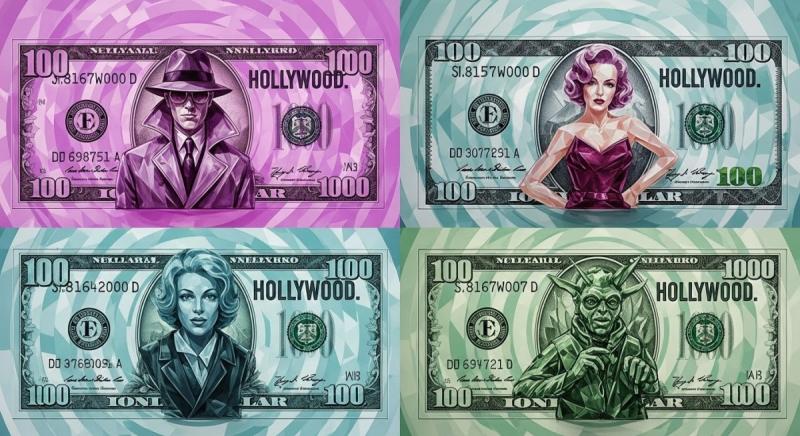
Here's something that bugs everyone. Hollywood spends $100 million making a single movie (which could well lose money) where instead they could make 100, $1 million movies, some of which will make big bucks and actually please more audiences.
So why don't they?
Well, it turns out that the big bet makes more financial sense. And if there's something we know about Hollywood, it's that it runs on money. It's a business first and foremost.
So let me explain this without making your head hurt.
The Secret Cost Nobody Sees #
First off, a $100 million movie doesn't actually cost $100 million. That's just what they spend filming it.
Then comes marketing. Billboards, TV ads, YouTube commercials, posters everywhere. That costs another $100 million. Sometimes more.
So your $100 million movie really costs $200 million before anyone buys a ticket.
Now here's the part that hurts. Movie theaters keep about half the ticket money. The studio gets the other half. So if the movie makes $200 million at theaters, the studio only gets $100 million back.
Your $100 million movie needs to make $400 million just to break even. That's why so many movies "flop" even when they make hundreds of millions.
What Happens With Small Movies #
But what about low-budget movies? Those around $1 million each.
Let's say Hollywood makes a movie for $1 million. It still needs marketing. You can't just make a film and hope people magically find it. So add another $1 million for ads and promotions.
But here's the problem. Spreading $1 million on marketing for a single film is like whispering in a stadium. Nobody hears you. (Remember, a single Super Bowl commercial costs $7 million for 30 seconds; your low-budget marketing won't stand a chance.)
Your movie gets buried. You lose everything.
So if you make a hundred $1 million movies, with marketing you've spent $200 million and the chance that it will get into theaters and be seen by hordes of people is negligible.
You lose $200 million.
When a Big Movie Wins #
Barbie spent about $145 million making the movie and $150 million marketing it. Total cost: roughly $300 million.
It made $1.4 billion worldwide. After theaters took their cut, the studio probably kept around $600 million.
Profit: $300 million from one film.
To make that same $300 million from $1 million movies would mean that every single small film would need to be a hit. That never happens. Most small movies lose money quietly.
The One Exception Everyone Mentions #
People always bring up Paranormal Activity. Made for $15,000, earned $194 million. Seems like proof small movies work.
But here's what they don't tell you. The filmmakers sold it to a big studio. That studio spent years fixing it and spent $10 million marketing it nationwide.
It wasn't really a $15,000 success. It was a $10 million movie that hit big.
But for every Paranormal Activity, there are literally hundreds of small movies that don't make money or just about perhaps cover costs.
No, a movie like Paranormal Activity happens once every ten years. Not every week. You can't build a business model on lightning strikes.
The Jaws Story: When Everything Changed #
Let's go back and do some history.
In 1975, movies didn't work like this. Summer was when bad movies went to die. Big movies came out at Christmas.
Then Steven Spielberg made Jaws. It cost about $11 million. The studio spent almost $2 million on TV ads, which was crazy money back then.
They opened it in over 400 theaters at once. This was unheard of. Most movies opened in 50 theaters and grew slowly.
Result: Everyone talked about Jaws all summer. It made $470 million worldwide. That's like making $2 billion today when you adjust for inflation.
Hollywood learned a lesson. One massive movie with massive marketing beats a whole bunch of quiet movies with modest marketing every single time.
Why Netflix Plays a Different Game #
Meanwhile, Netflix spent $18 billion on shows and movies in 2025. But they made hundreds of things, not 18 giant blockbusters.
So how come Netflix's math works differently?
No movie theaters. Nobody's taking half the money. Subscribers already paid their monthly fee. Netflix just needs to keep them happy so they don't cancel.
If Netflix spends $20 million on a movie that keeps 5 million people subscribed for one extra month, they made money. It's simple.
Regular movie studios can't do this. They need movie theaters to survive. Theaters won't show their films if they also put them on streaming the same day.
What Audiences Actually Want #
But the truth is that movie theaters are dying slowly. Fewer people go every year. Why leave your house when Netflix is right there?
The only movies that get people off their couch are spectacles. Big stars, huge action, things you need to see on a giant screen.
No one goes to the theater to watch an indie romance with unknown actors. They go to see big stars and big events.
That means expensive movies. You can't make a spectacle cheaply. The effects cost money. The stars cost money. Everything costs money.
This creates a cycle. Theaters need blockbusters to survive. Studios need theaters to make money. So blockbusters keep getting bigger and more expensive.
The Future: Bigger or Bust #
Some studios are trying different approaches. Warner Bros made several medium-budget movies in 2025 instead of two giant ones. It worked okay.
But most studios are going bigger. Disney's next Avengers movies will probably cost $400 million each. They're doubling down on spectacle.
Why? Because when spectacle works, nothing beats it. Avengers: Endgame made $2.8 billion worldwide. One movie paid for years of other films.
What This Means For You #
Next time you see a movie cost $300 million and think, "that's insane," remember this: Hollywood isn't stupid.
They've done the math a thousand times. One $300 million hit makes more money than 100 small films. The marketing power, the star power, the cultural moment, it all scales up better than it scales down.
Could they make more small films and take smaller risks? Yes. Would they make more money? Probably not.
The system isn't perfect. Half of blockbusters lose money. But the ones that win, win so big that it covers everything else.
That's the gamble. And as long as people keep showing up for Marvel movies and Top Gun sequels, Hollywood will keep placing big bets.


Comments
No comments yet. Be the first to share your thoughts.
Log in to join the discussion.