 enCAST.pro
Should You Register Your Screenplay? The Complete Truth About Protection and Going to Court
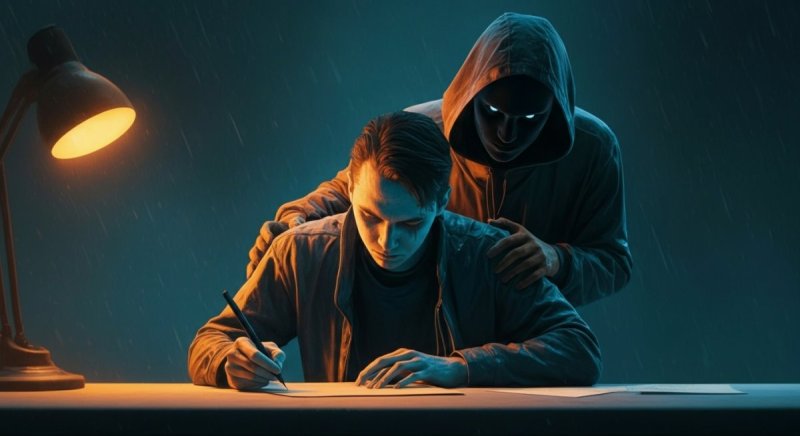
Every screenwriter eventually asks: should I register my screenplay?
The answer is yes, but not for the reason you think.
Most articles tell you to register so you can sue if someone steals your work. That's technically true but practically misleading. The reality is that most writers will never sue anyone, even when their work gets stolen. Court is expensive, slow, and you'll probably lose even if you're right.
So why register? Because without it, you have nothing. You cannot negotiate. You cannot threaten legal action. You cannot sell your script to legitimate buyers. You cannot even get a lawyer to listen to you. Registration doesn't guarantee you'll win a fight. It guarantees you can have the fight at all if you need to.
Think of registration like car insurance. You hope you never need it. You probably won't need it. But if something happens and you don't have it, you're lost. Registration costs about as much as a nice dinner and takes an hour. A lawsuit costs more than a house and takes years. You're not paying for a lawsuit. You're paying for options.
What Copyright Actually Protects #
Copyright doesn't protect ideas. It protects expression. This is the single most misunderstood concept in entertainment law, and it's why most copyright lawsuits fail.
You cannot copyright "a movie about a teenager who saves an island." That's an idea. You cannot copyright "a love story between rivals" or "a team of specialists pulling off a heist." These are concepts, and concepts belong to everyone. You cannot even copyright titles. There's no law stopping someone from making another film called Avatar or Zootopia (though trademark law might complicate things).
What you can copyright is how you tell the story. Your specific dialogue. Your unique character details. Your particular scene descriptions. The way you structure your plot. Your screenplay as a complete, specific work. The more detailed and specific your expression, the stronger your protection.
Here's how courts think about it: you cannot own "a professor who goes on adventures." But you might own "Professor Indiana Jones, an archaeologist with a brown fedora and bullwhip who teaches at Marshall College and searches for ancient artifacts while fighting Nazis." The first is an idea. The second is expression.
This distinction destroys most copyright cases before they even start.
What Actually Happens When Someone Steals Your Work #
In 2025, a writer named Buck Woodall sued Disney over Moana. He'd spent years developing a screenplay called Bucky the Wave Warrior about a teenager who defies her parents to save a Polynesian island. Both stories included navigation by stars, a demigod with tattoos, and surviving storms at sea. He claimed Disney had access to his work.
Disney won in under three hours of jury deliberation. The jury decided Disney never saw Woodall's script, and without access, the case was over. The similarities didn't matter. Woodall spent probably hundreds of thousands in legal fees and got nothing.
The Zootopia case was even more instructive. Gary Goldman is a legitimate Hollywood screenwriter who wrote Total Recall and Big Trouble in Little China. In 2000 and 2009, he pitched a project called Zootopia directly to Disney executives. Same title, same concept of civilized animals in a society exploring prejudice and stereotypes. Disney said no, both times. Then in 2016, they released Zootopia and made over a billion dollars.
Goldman had documentation proving he'd pitched to Disney. The judge still dismissed the case. Why? The similarities were "themes, not plot points" and "too general to be protected by copyright law." Even direct pitches to the company that rejected you don't guarantee a win.
James Cameron's Avatar got sued at least five times by different people claiming he stole their work. Every lawsuit failed. This pattern repeats constantly in entertainment. Someone makes a successful film, multiple people claim it was stolen from them, courts dismiss the cases.
There's exactly one famous case where the writer won. In 1990, Art Buchwald sued Paramount, claiming Eddie Murphy's Coming to America was stolen from his pitch. He won. That was 35 years ago, and entertainment lawyers still talk about it because it's so rare.
Why Most Cases Fail #
To win a copyright lawsuit anywhere in the world, you must prove two things: access and substantial similarity.
Access means proving the person who made the film actually saw your screenplay. An email where you sent them the script is good proof. Submission records with dates and signatures are good proof. "I entered a contest they might have judged" is not proof. "It was posted online where anyone could see it" is not proof. "It's too similar to be coincidence" is not proof. Courts require evidence, not speculation.
Substantial similarity means proving they copied your specific expression, not your general ideas. Courts filter out everything that's not protectable. They remove stock plot devices, common character types, genre conventions, and scenes that naturally occur in certain stories. What's left must be substantially similar to your work.
This is why cases fail. Both stories have teenagers who disobey their parents? That's not protectable. Both have mentor figures? Not protectable. Both explore identity and belonging? Not protectable. Unless the dialogue is nearly identical, the character details are uniquely yours, and the plot structure follows your specific sequence, you'll lose.
The Zootopia case failed because themes aren't protectable. The Moana case failed because access couldn't be proven. Most cases fail on both.
The Money Reality #
Copyright lawyers charge between $400 and $800 per hour in most developed countries. A lawsuit costs $100,000 to $500,000 minimum, sometimes millions. These cases take two to five years. Some countries have small claims options for copyright, but the basic economics remain brutal: you need proof, money, and time.
Here's what registration gets you in practical terms. If you registered before someone infringed, you can potentially win statutory damages that don't depend on proving how much money you lost. In the US, that's up to $150,000 per work. Other countries have different amounts. More importantly, some countries allow the loser to pay the winner's legal fees. This is huge because it means some lawyers will take strong cases on contingency, only getting paid if you win.
If you registered after the infringement, you typically only get actual damages. For an unproduced screenplay, that's usually zero. You cannot prove you lost money when the script was never making money. You pay your own legal fees even if you win.
If you never registered, you cannot sue at all in most countries. End of story.
Some countries have created cheaper alternatives to regular courts. The US Copyright Claims Board lets you claim up to $30,000 through a streamlined process designed for non-lawyers. But the other side can force you into expensive regular court instead. Other countries are exploring similar systems, but full court litigation remains prohibitively expensive everywhere.
What You Should Actually Do #
Registration costs between $50 and $100 in most countries. The United States charges $45-$65 at copyright.gov. The UK charges around £50-£100 through services like The Script Vault. Canada charges about $50-$85. India charges ₹500-₹2,000. Many countries offer free or very cheap registration. It takes about an hour and protects you globally through international treaties.
In the United States, you'll also hear about WGA (Writers Guild of America) registration . This costs $20 for non-members and $10 for members, and it lasts five years before you need to renew. But understand what WGA registration actually is: it's evidence of when you completed your script. It's a timestamp service that proves when you completed your script. However, if you're targeting the American market—whether you're American or not—WGA registration has become industry standard. Producers, agents, and script competitions often expect or require it. It's the professional credential that says, "I'm serious about selling in Hollywood."
Copyright registration (through the Copyright Office) is what protects you legally and lets you sue. WGA registration is what the industry expects to see. If you're a European, Asian, or African writer trying to sell in America, you should have both: copyright registration in your home country for legal protection, and WGA registration to meet American industry expectations. If you're only writing for your local market, WGA registration isn't necessary.
When to Register
Register before you show your screenplay to anyone outside your immediate family. Register before you submit to competitions, before you send to producers or agents, before you post online. Once it's out in the world, register immediately if you haven't already.
If someone later copies your work, get honest legal advice first. Pay a lawyer $500-$1,000 for a consultation. They'll tell you whether you have a case worth pursuing. Don't let anger or principle drive you into an unwinnable lawsuit that costs everything.
Most professional screenwriters have seen similar projects get made. They don't sue. They keep writing. Why? Because ideas really are "in the air." Multiple writers genuinely come up with similar concepts simultaneously. It feels like theft when it's often coincidence. Even actual theft is hard to prove and harder to afford fighting.
Your career isn't one script. It's dozens of scripts over decades. One stolen idea, even a real theft you can prove, probably isn't worth derailing everything else. Sometimes the right answer is to document what happened, register everything you write going forward, and move on.
The Real Reason to Register #
Registration doesn't stop theft. It doesn't make lawsuits affordable. It doesn't guarantee you'll win if you fight. What it does is create options where none existed before.
Without registration, if someone steals your screenplay, you have exactly zero choices. You cannot threaten legal action because you cannot take legal action. You cannot negotiate a settlement because you have no leverage. You cannot even sell your script to someone else because you cannot prove clean ownership. You're powerless.
With registration, you have choices. Maybe you can use small claims court. Maybe you can get a lawyer on contingency. Maybe you can negotiate a settlement. Maybe you can at least send a threatening letter that makes them nervous. Maybe you walk away, but it's your decision based on options you've evaluated, not forced on you by lack of preparation.
You're also protected when things go right. When a legitimate producer wants to option your script, they'll ask if it's registered. Production companies, studios, and investors want clean ownership documentation. An unregistered script creates legal risk for them. Many won't touch it.
Registration proves you're a professional who takes your work seriously. It shows you understand the business. It demonstrates you're prepared for both success and theft. It costs less than a tank of gas and takes less time than watching a movie.
The entertainment industry isn't fair. Registration doesn't make it fair. But registration means that if something valuable happens with your work, whether good or bad, you have options for dealing with it. That's worth $50 and an hour of your time.
Finally #
Register your screenplay before you share it. Document everyone who sees it. Work with legitimate people. If someone steals your work, get honest legal advice, evaluate your options rationally rather than emotionally, and decide whether fighting is worth the cost. Then keep writing regardless of what you decide.
Your best protection isn't legal action. It's being so productive and talented that one stolen script doesn't matter because you've got five more ready to go. Register everything anyway. Because on the day something does matter, you'll be glad you did.


Comments
No comments yet. Be the first to share your thoughts.
Log in to join the discussion.