 enCAST.pro
How to Create a Film Trailer That Grabs Attention and Gets Watched
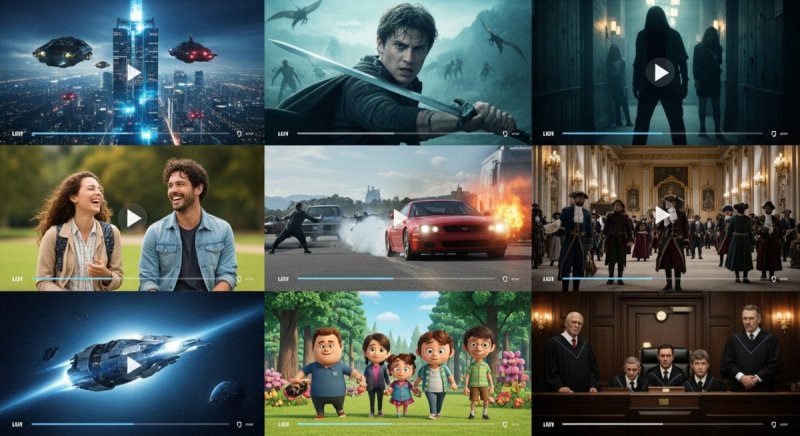 A great trailer can make or break your film. It is your movie's first handshake with the world. Get it right, and audiences will want more. Get it wrong, and they scroll past without a second thought.
Here's how to create a trailer that stops people mid-scroll and makes them want to see your film.
The First 5 Seconds Decide Everything #
Your ad has less than a second to prove itself. By one second, the viewer has already decided to skip or stay. This means your opening cannot be slow.
Roughly 94% of pre-roll ads on YouTube are skipped shortly after the first five seconds. Your trailer faces the same challenge as any YouTube ad. 65.9% of viewers always skip a video ad if there's an option to do so.
The term thumbstopper emerged from a desire to stop people from scrolling through their social media feeds while browsing on their phone. Your opening must be a thumbstopper.
What works in those first seconds? Start with an attention-grabbing moment which could be:
- a piece of dialogue
- a dramatic image
- a sound cue
The Four-Part Trailer Structure #
Professional trailers follow a proven structure:
- The opening hook (0–10 seconds) starts with an attention-grabbing moment.
- Set up the world (10–30 seconds) briefly introduces the setting, tone, and central premise.
- Build tension (30–60 seconds) uses escalating stakes, conflict, or mystery to deepen interest.
- Crescendo and tease (60–90 seconds) ends on a high note, leaving the audience wanting more.
There's no set rule about how long your trailer should be, but limiting your trailer to a couple minutes is a good start.
A teaser meanwhile, is a very brief, super-minimal trailer designed to, of course, tease the viewer and build anticipation. A teaser only has to have one hook.
Start With Sound, Not Picture #
This surprises most filmmakers. It would never occur to most long-form editors to begin a trailer by cutting the audio first. In trailers, a couple of unique factors come into play. First, you have the inherent musicality of a trailer. It's rhythmic and relies heavily on the beats of your music and the small, crafted, editorial moments.
By starting with your audio, you'll have increased flexibility to make sure you get the timing and pacing correct before you start filling in picture.
Music is not background. It is structure. Your cuts should land on beats. Your emotional shifts should follow musical changes.
The "Nothing Resolves" Rule #
In just about any good trailer, keep one rule in mind: nothing should fully resolve. Trailers are made of numerous small sequences of shots and lines. Your goal should be to keep each short sequence unresolved.
If the hero faces a villain, show the confrontation, but cut away before we see who wins. If a character asks a question, don't show the answer. Every mini-scene should feel incomplete. This incompleteness creates the urge to watch the full film.
Think of your trailer as a series of promises you're making to an audience.
The Two-Peak Pattern for Drama Films #
Research on drama trailers found something important. It is not the overall level of arousal that is likely to affect these factors, but instead a specific pattern of arousal that allows variation and build-up to memorable scenes. Based on the analysis of four drama film trailers, a two-peak structure provides an optimal arousal curve.
This means your trailer needs two emotional high points and not one continuous escalation. Build to a peak. Drop back down. Then build to an even bigger peak at the end.
Types of Cold Opens That Work #
Here are proven techniques for those crucial first seconds:
In Medias Res This is a narrative term which refers to starting in the middle of a story. With the right scene, this is a very effective way to start a movie, game, or trailer because it feels raw and unfiltered.
The Misdirect This is a classic trailer cold open technique where the trailer misleads you into thinking the story is about one thing, but it then pulls out the rug, and reveals something entirely different.
Fast Cutting Fast cutting is something which is inherently more difficult to stop watching because it tells you there's going to be something new coming up in less than a second.
The Unique Mechanic Show something your film does that no other film does. What is visually impossible or unexpected in your story? Lead with that.
What to Include (And What to Hide) #
You want to give away enough of your film that it accurately represents the story, but not so much that the viewer feels like they've seen it all. Focusing on the first half is usually a good rule of thumb.
To cut a trailer that resonates, pinpoint the most compelling aspects: unique selling points like a gripping performance or striking visual style, character moments that highlight the hero's journey, and striking visuals or sounds that leave a lasting impression.
The Dialogue-Moment Pattern #
During story-heavy sections, professional trailer editors follow a specific rhythm. The general pattern you want to follow looks like this:
line > moment > line > moment > line > moment
Don't let dialogue run continuously. Each line should be followed by a visual beat or reaction before the next line lands.
Sound Design Is Half Your Trailer #
Trailer editing is by far the most sound-design intensive style of editing you could ever attempt.
Make the music the protagonist of your sound files. Make sure your dialogue lines and neat sound effects work around it rather than slamming one on top of the other. Keep dialogue out of the silence and let the images speak for themselves before the visual and auditory intensity increases abruptly again.
Test Before You Release #
Before finalising the trailer, gather feedback from a test audience. This can help identify areas for improvement, such as pacing or clarity.
Show your trailer to people who know nothing about your film. Ask one question: Would you watch this? Then stay quiet and listen!
Common Mistakes to Avoid #
Long logos at the start
Always keep the production company logo up front as short as possible—or don't have it at all. So many indie film trailers that have 15 seconds of a logo up front from a company that no one has ever heard of, and it just comes across as unprofessional.
Slow environmental shots
The key is to give the audience a reason to keep watching by showing them something which as soon as it starts needs to be resolved. This is why slow shots of environment art should be avoided; unless there's some environmental storytelling in the art, there's no story hook holding the audience in suspense.
Telling instead of showing
Your trailer should create questions, not answer them.
The Bottom Line #
Your trailer exists to do one thing: make someone want to see your film. Every frame, every cut, every sound should serve that goal.
Top performing creatives often have a strong first 3–5 seconds hook and a clear call to action. Hook them fast. Build with rhythm. End on a moment that demands resolution.
If you can do that, your trailer becomes more than marketing. It becomes an experience that audiences want to complete by watching your film.


Comments
No comments yet. Be the first to share your thoughts.
Log in to join the discussion.