 enCAST.pro
How Actors Can Help Editors: Simple Continuity Tips
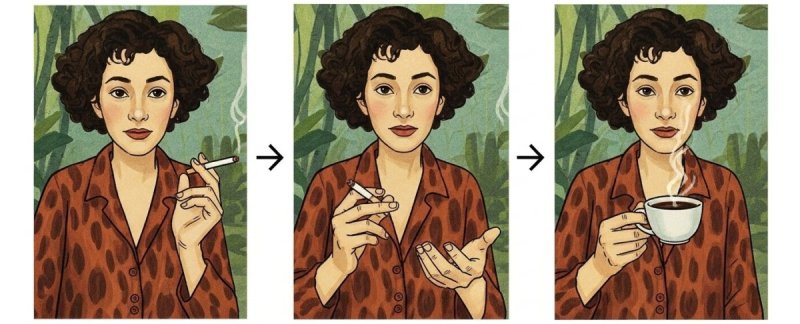
Your best acting take is useless if the editor cannot use it. This happens more than you think.
Film editors work with many takes from different camera angles. These takes might be filmed hours or days apart. When you keep your movements the same in every take, editors can pick your best performance. When you change things, your best acting cannot be in the movie.
You Must Track Your Own Continuity #
Yes, there is a script supervisor on (bigger) sets. They watch continuity. But they cannot catch everything.
On big movie sets, they watch the main actors closely. If you have a small role with one or two lines, they might miss your mistakes. There is too much happening on set.
You know your character best. You must remember what you did. This is your job, not just the script supervisor's job.
Hold Props the Same Way Every Time #
This is the most common mistake actors make. You hold a coffee cup in your right hand for the first take. In the next take, you must hold it in your right hand again.
This rule works for everything you touch:
- Phone goes in the same pocket every time
- Pen clicks at the same moment every time
- Jacket stays buttoned or unbuttoned the same way
If you forget to button your jacket, you will wear an unbuttoned jacket for all the other shots in that scene. This seems small, but it ruins your best performance.
Match Your Actions to Your Words #
Let's say you scratch your nose before you say a line. You must scratch your nose at the same moment in every take. Before the same word.
Maybe you pick up a glass halfway through your sentence. Do it at the exact same word in every take. Not before. Not after. The same word.
This gives editors clean places to cut. They can use any take and it will look smooth.
Your Eyes Must Look the Same Direction #
Where you look is very important. It tells the audience where other people are standing.
If you look right when you talk to another actor in the wide shot, look right in the close-up shot too. Even if that actor is not there anymore.
Sometimes directors film actors on different days. Your eyes make it look like you were in the same room.
Stay Fresh But Repeat Your Movements #
This sounds hard. It is hard. But good actors learn how to do it.
Your feelings can change between takes. You can try new emotions. You can react differently to your scene partner. This is good.
But when you stand up, stand up the same way. When you put down your keys, use the same hand. Keep your movements the same. Change your feelings.
What Editors Really Need #
Editors want to pick your best acting. They do not want to fix your continuity mistakes.
When your takes match, editors look at your performance. They pick the take where you acted best. When your takes do not match, they cannot use your best acting. They must use the take that matches.
You give them good material. They make a good scene. Simple.
Small Things That Matter #
Hair position is important. If your hair is behind your shoulder in one take, keep it behind your shoulder in all takes.
Jewelry matters too. A necklace that appears and disappears looks bad. Editors must avoid those shots.
Watch your hands. Arms crossed, hands in pockets, touching your face. These must match when the camera moves.
How to Get Better #
Film yourself with friends using your phone. Film the same scene two or three times then watch the video. Did you keep your movements the same? This practice helps a lot.
Every movie you work on teaches you something new. You will get better with time.
Try to watch an editor work if you can. Seeing how they put scenes together changes how you act on set.
When You Make a Mistake #
Everyone makes mistakes. Even good actors forget their blocking sometimes.
Tell the script supervisor right away if you changed something. They can write it down and help fix it. Do not hide mistakes.
Sometimes editors use a take with a continuity problem because your acting was very good. But do not make them choose between your best acting and good continuity. Give them both.
Be Professional #
Good film actors remember what directors and editors need. They keep their performance strong and their movements consistent.
Directors notice actors who track their own details. Editors remember actors whose takes work well together. This gets you more jobs.
Your job is not just saying lines well. Your job includes making sure those lines can be in the final movie. When you master continuity, editors can use your best work. That is what you want to see on screen.


Comments
No comments yet. Be the first to share your thoughts.
Log in to join the discussion.