 enCAST.pro
Why Paying Artists a Basic Income Makes Economic Sense: Ireland and the Global Picture
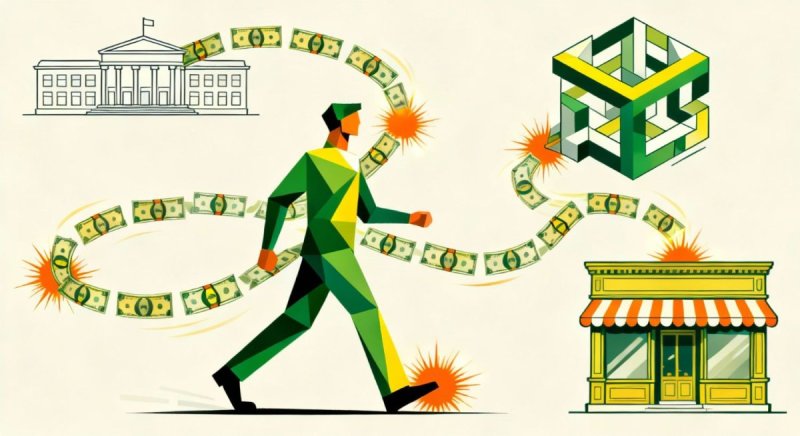 Ireland just made its Basic Income for the Arts scheme permanent. Starting in 2026, 4,000 artists will receive €325 weekly with no strings attached. This isn't charity; it's an investment that returns €1.39 to society for every €1 spent.
But Ireland isn't alone. Countries have been experimenting with artist income support for nearly a century. Some programs thrived for decades. Others collapsed. Here's what works, what doesn't, and why supporting artists benefits everyone.
What Ireland Is Doing Right Now #
Ireland's pilot scheme started in 2022 with 2,000 artists receiving €325 per week. The government announced in the 2026 Budget that this will become permanent, expanding to 4,000 places with applications opening in September 2026.
The results convinced policymakers. Recipients' arts-related income increased by more than €500 per month on average, and for every €1 invested, society receives €1.39 in return, including more than €100 million in social and economic benefits.
Participants receiving the monthly payment spend more time working on their creative practice than the control group. They are also more likely to make ends meet by exclusively working in the arts sector and to finish new pieces.
This scheme covers film directors, actors, screenwriters, and other creative professionals—though it controversially excludes many technical crew positions.
France: The 90-Year Success Story #
France created the world's longest-running artist support scheme in 1936. Originally designed for film industry technicians, Intermittence du Spectacle now covers several hundred thousand performing artists and technicians across theater, music, dance, and audiovisual sectors.
The system works differently than Ireland's. Artists who work at least 507 hours over 10 months qualify for unemployment benefits during non-working periods, effectively receiving government-subsidized income between contracts.
An American dancer who moved to Paris said the system, "has changed my life," allowing her to run a successful experimental dance company full-time instead of teaching pilates on the side to survive.
The French scheme hasn't been easy to maintain. It faced major threats in 2003 when cuts were proposed, leading to strikes that shut down the prestigious Avignon theater festival. Artists have repeatedly fought to preserve the system over its 84-year existence.
But it survived because the evidence shows it works. France's vibrant arts scene and internationally competitive film industry owe much to this infrastructure.
Germany's Insurance Model Since 1983 #
Germany established the Künstlersozialkasse (KSK) in 1983, giving freelance artists access to social security systems. Like traditional employees, artists pay approximately half of their social insurance contributions, with the other half funded through employer levies and federal subsidies.
This isn't basic income, it's subsidized health, pension, and nursing care insurance. Artists pay contributions based on their annual income, with a minimum threshold of €3,900 per year. Career entrants get special protection for their first three years even if they don't meet minimum income requirements.
The system is financed 50% by artist contributions, 20% by taxpayers, and approximately 30% by companies that use artistic services.
Germany's approach recognizes that artists face irregular income and need social safety nets. The KSK doesn't provide cash payments like Ireland or France, but it solves the same fundamental problem—keeping artists financially secure enough to create.
The Netherlands: What Happens When Support Ends #
The Netherlands ran artist subsidy programs from 1949 to 2012. The story reveals what societies lose when they abandon artist support.
What became the Beeldende Kunstenaars Regeling (BKR) ran from 1949 to 1987. Artists exchanged artworks for weekly income payments. Between 1949 and 1987, at least 5,688 artists used the scheme at some point, producing more than half a million artworks.
The government ended BKR in 1987 amid controversy over costs and concerns about artists exploiting the system. Research later showed that 20% of artists using BKR were indeed exploiting it, but that means 80% were legitimately using it to develop careers and weather financial storms.
The government tried replacement schemes: WIK in 1999, then WWIK in 2005, which provided up to 70% of guaranteed minimum income for up to 48 months spread over 10 years. That too ended in 2012.
Today, Dutch artists fall back on general unemployment benefits or find other work. The Netherlands still has arts funding bodies, but nothing replacing the systematic income support that existed for 63 years.
Why This Concept Makes Sense Everywhere #
These programs address a real market failure. Society values art enormously: we stream films, attend concerts, visit museums. But individual artists often cannot capture enough value to survive on their creative work alone.
The economic logic is straightforward. Ireland's cost-benefit analysis found that recipients spend more hours on creative practice, complete more finished works, and generate economic activity that exceeds the investment.
Artists supported by these schemes hire other professionals. They rent studios. They buy equipment and materials. That spending creates jobs for accountants, landlords, suppliers, and technical workers throughout the creative economy.
One French musician noted that cutting artist support doesn't just hurt artists, but it damages smaller independent arts organizations while large institutions continue thriving. It leads to concentration of cultural activity in major cities rather than penetration into regional areas.
Traditional arts funding is also inefficient. Competitive grants require applications, review committees, oversight, and reporting. That creates administrative costs. Basic income or unemployment-based schemes eliminate that bureaucracy, trusting artists to know what they need.
The Patterns Across Countries #
Looking at these programs reveals consistent patterns about what works and what doesn't.
Successful schemes share key features: They provide predictable income without excessive bureaucracy. They recognize the irregular nature of arts work. They're funded through mixed sources such as artist contributions, employer levies, and government subsidies. They have political champions who defend them when cuts are proposed.
Programs that failed or ended had common problems: They became politically vulnerable during economic downturns. They struggled with defining who qualifies as an artist. They faced criticism over perceived abuse, even when most participants used them legitimately. They lost public support when framed as handouts rather than infrastructure investment.
Countries now expressing interest in Ireland's scheme include Australia, Wales, South Korea, Canada, Norway, Lithuania, Estonia, and Belgium to name but a few. The international attention shows growing recognition that artist support isn't a luxury but sensible economic policy.
Why Countries Hesitate #
If these programs work so well, why don't more countries have them?
The political challenge is framing. When presented as "paying artists not to work," schemes face fierce opposition. When presented as "investing in cultural infrastructure that generates economic returns," they gain support.
There's also the qualification problem. Every program struggles with defining who counts as an artist. Ireland's scheme excludes many technical crew members, creating resentment. The Netherlands ended BKR partly because of battles over who should qualify.
Economic downturns threaten these programs. France's system survived cuts in 2003 and 2014 only through massive protests. The Netherlands ended its schemes during austerity periods. Political will matters as much as evidence.
The Bottom Line #
Paying artists a basic income or providing equivalent support isn't about charity. It's infrastructure investment that generates measurable returns.
France has proven the concept works for 90 years. Germany's 40-year-old insurance model serves similar purposes. Ireland's new permanent scheme adds contemporary evidence. These aren't social experiments, they're proven policy tools.
The real question isn't whether supporting artists makes economic sense. The evidence clearly shows it does. The question is whether societies value culture enough to invest in the infrastructure that produces it.
Countries abandoning artist support don't save money in the long run. They sacrifice cultural vitality, economic multiplier effects, and competitive advantage in creative industries. They lose artists to countries that treat cultural work as legitimate infrastructure.
Ireland's permanent commitment to artist basic income represents more than supporting 4,000 individuals. It's a statement that culture matters, that creative work deserves the same infrastructure investment as roads or broadband, and that societies benefit when artists can focus on creating rather than just surviving.


Questions about this page?
If something here is unclear or out of date, let us know through our contact page.