 enCAST.pro
The Grubby Truth of the Hollywood Walk of Fame
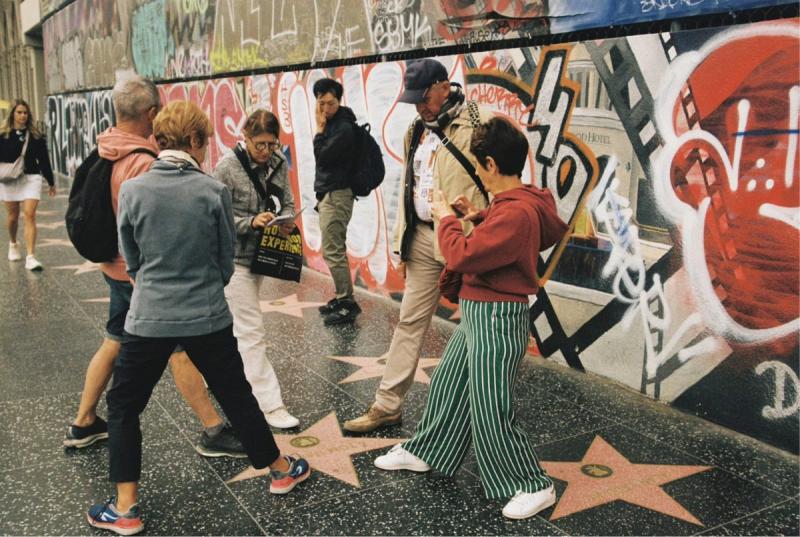 The Hollywood Walk of Fame looks glamorous on TV. The reality is much different. This famous sidewalk attracts 10 million visitors yearly, yet tourists often call it the world's worst tourist attraction.
Let me show you what really happens behind those pink terrazzo stars.
The Money Behind the Stars #
Getting a star costs $85,000 as of 2025 .
Celebrities rarely pay this themselves. Film studios, record labels, and fan clubs typically cover the cost. The money pays for creating the star, installing it, hosting the unveiling ceremony, and ongoing maintenance of the entire Walk.
Think of it as a marketing expense. For example, many celebrities (or their management) strategically schedule their star ceremonies to coincide with new movie releases or album launches. That $85,000 buys significant publicity.
Who Actually Decides Who Gets a Star #
The Hollywood Chamber of Commerce controls everything. A selection committee of six experts meets once per year in June. They review 200 to 300 applications and select only 24 to 30 winners annually.
The requirements are specific. Candidates must have worked in entertainment for at least five years. They need documented professional achievements and a history of community service. Most importantly, they must agree to be nominated and promise to attend the unveiling ceremony.
Anyone can nominate a celebrity. Fans, family members, or industry professionals can submit applications. But there is a $275 application fee every two years. And the nominee must agree to it, or the nomination is rejected.
The Walk Stretches Across 18 Blocks #
The Walk of Fame covers 1.3 miles of Hollywood Boulevard between Gower Street and La Brea Avenue. It extends another 0.4 miles on Vine Street between Sunset Boulevard and Yucca Street.
As of August 2025, there are 2,818 stars embedded in the sidewalk. The stars are made of coral-pink terrazzo with brass inlays. Each measures 3 feet by 3 feet.
Six categories exist: Motion Pictures, Television, Recording, Radio, Live Theatre/Performance, and Sports Entertainment (added in 2023).
Stars Stay Forever: no matter what they do #
Once a star is installed, it never gets removed.
The Hollywood Chamber of Commerce has maintained this policy strictly since the Walk was designated as a California State Historic Landmark in 1978.
This policy has created significant controversy. Bill Cosby has a star from 1977 even though he was convicted of sexual assault in 2018 (the conviction was later overturned). Harvey Weinstein, is also there, along with a whole slew of others.
The Chamber's position is clear: "Once a star has been added, it is considered a part of the historic fabric of the Hollywood Walk of Fame" . They argue the stars commemorate professional accomplishments only, not personal behavior.
The Trump Star Vandalism Saga #
Donald Trump received his star in 2007 for producing The Apprentice and the Miss Universe Pageant. His star has become the most vandalized in Walk of Fame history.
The attacks began in 2016. Someone spray-painted a swastika on it. A street artist built a miniature wall around it. In October 2016, James Lambert Otis used a pickaxe and sledgehammer to completely destroy the star and was sentenced to three years probation, 20 days community service, and ordered to pay $4,400 in damages.
In July 2018, Austin Clay destroyed it with a pickaxe at 3 a.m and later received three years probation and paid $9,400 in restitution. In October 2020, someone dressed as the Hulk smashed it yet another time.
The star has been spray-painted, urinated on, and had dog feces placed on it multiple times. Each time, the Chamber repairs or replaces it at the vandal's expense.
West Hollywood City Council passed a unanimous resolution in 2018 requesting Trump's star be permanently removed. The Chamber refused, citing its historic landmark status.
Major Scandals Beyond Trump #
Bill Cosby's star has been vandalized repeatedly since sexual assault allegations surfaced. In 2014 and 2018, vandals wrote "rapist" across it. The Chamber cleaned and repaired it each time.
In 2025, Gal Gadot's newly unveiled star was vandalized due to her outspoken support of the Israeli military. Protesters showed up at her unveiling ceremony.
The Walk includes stars for Gig Young, who murdered his wife before committing suicide. It honors numerous other figures whose later actions contradicted their professional achievements.
What Tourists Actually Experience #
Recent surveys ranked the Hollywood Walk of Fame as one of the worst tourist attractions on Earth . This surprises many who expect glamour based on TV appearances.
Visitors describe it as "dirty, grimy, and unsafe." The area has significant homelessness. Aggressive street performers dressed as superheroes demand money for photos. Tourists report feeling threatened or scammed.
Reviews on TripAdvisor use words like "completely underwhelming," "so disappointing," and "meh." One visitor said it looked like a place where "people give up on life."
The smell is another common complaint. Between the street vendors, homeless encampments, and general urban grime, Hollywood Boulevard does not match its televised image.
Yet 10 million people visit annually. It attracts more visitors than the Sunset Strip, Grauman's Chinese Theatre, and the Los Angeles County Museum of Art combined.
How the Industry Views It #
Many A-list celebrities refuse Walk of Fame stars. Their rejections reveal how Hollywood insiders actually view this "honor."
Prince turned down a star twice before his death in 2016. Julia Roberts declined in 1995 and again in 2020. Bruce Springsteen accepted but never attended his ceremony, creating the "Springsteen Clause" requiring nominees to sign attendance agreements.
Other refusers include Madonna, Whitney Houston, George Clooney, Clint Eastwood, Denzel Washington, and Al Pacino. Some accepted nominations but never scheduled ceremonies, causing their selections to expire.
Major stars without stars include Leonardo DiCaprio, Brad Pitt, Angelina Jolie, Robert De Niro, and George Lucas. Some were never nominated. Others simply showed no interest.
Is It Just Publicity? #
The simple answer is yes. The Walk of Fame functions primarily as a commercial marketing tool.
Walk of Fame producer Ana Martinez openly acknowledges that ceremonies require extensive campaigns "typically waged by industry insiders." The $85,000 fee and mandatory attendance requirement make it a coordinated publicity event.
Celebrities time their unveilings to maximize exposure. A new movie launching? Schedule your star ceremony the same week. Album dropping? Perfect time for a Walk of Fame event.
The Hollywood Chamber of Commerce benefits from tourism revenue. The entertainment industry gets publicity. The celebrities get a photo opportunity. Everyone involved treats it as business, not artistic recognition.
The Diversity Problem #
A 2011 CNN analysis found the Walk significantly underrepresents minorities . Only 5.1% of stars honored African-Americans, 3.4% honored Hispanics, and 0.4% honored Asians. These percentages fall far below those groups' representation in the U.S. population.
The Chamber says its committee works to improve diversity. However, the Walk reflects Hollywood's historical focus on white audiences and white performers.
Fictional Characters Have Stars Too #
But meanwhile, fictional characters get stars.
Mickey Mouse, Kermit the Frog, Big Bird, Bugs Bunny, Winnie the Pooh, and The Simpsons all have stars. In 2024, Batman became the first superhero to receive one, earning a Guinness World Record.
Godzilla was honored in 2004 as the first kaiju. The Walk includes stars for puppets, cartoon characters, and even one for the Apollo 11 astronauts (actually four monuments, one at each corner of Hollywood and Vine).
These choices further diminish the Walk's prestige among industry professionals.
The Bottom Line #
The Hollywood Walk of Fame operates as a paid publicity platform disguised as an honor. It costs $85,000, requires celebrities to show up for marketing photos, and refuses to remove stars from convicted criminals.
Tourists often leave disappointed by the dirty, crowded reality. Industry insiders frequently reject it. Multiple surveys name it among the world's worst attractions.
Yet it continues. The Chamber adds approximately 30 new stars yearly. Millions visit despite negative reviews. The controversy over Trump's star generates regular news coverage.
The Walk of Fame succeeds not because it honors excellence, but because it creates spectacle. It transforms entertainment industry marketing into a tourist attraction. The stars commemorate professional achievements, but they also represent $85,000 investments in publicity.
That is the truth about the Hollywood Walk of Fame.
Image credits: Sasha Matveeva on Unsplash


Questions about this page?
If something here is unclear or out of date, let us know through our contact page.